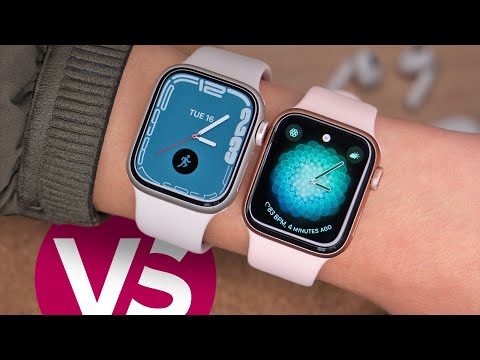
The Apple Watch Series 7 offers the same suite of sensors as the Series 6. These include an accelerometer, a gyroscope, a heart rate sensor, a barometer, an always-on altimeter, a compass, an SpO2 sensor, and a VO2 max sensor. These sensors have a host of health and fitness tracking features, including blood oxygen monitoring, heart rate monitoring, sleep tracking, fall detection, workout tracking, and more. The Apple Watch 7 has a starting price of $399 / £369 / AU$599 for the 41mm version, and $499 / £469 / AU$749 for the Cellular model. The smartwatch features a 70% brighter Always-On display, faster charging, and 20% more screen area, making it easier to use and read. The design also got a refresh with softer and more rounded edges and new sizes of 41mm and 45mm.
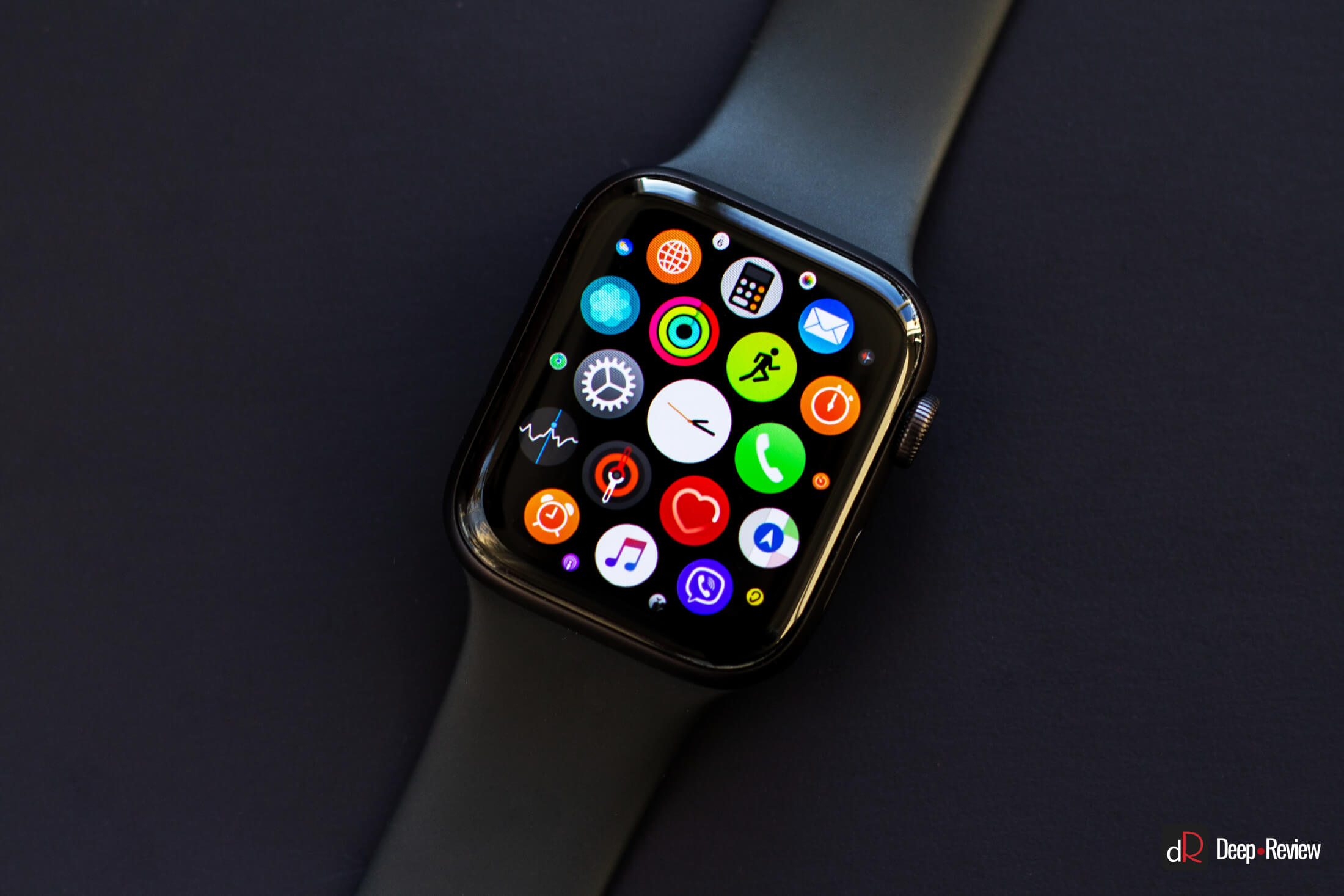
The Apple Watch 7 still includes all the nifty features of the Series 6, such as blood oxygen monitoring, an ECG app, and activity tracking. The Apple Watch Series 7 (starting at $399) is Cupertino's latest flagship smartwatch. The Series 7 is Apple's most attractive and durable wearable yet, and an Editors' Choice award winner.

The Apple Watch Series 7 deliver 18 hours of battery life but chargers over USB Type-C port, offering 33 percent faster charging than the previous generation. The Apple Watch Series 7 is made with 100 percent recycled aluminium. It also features a more durable glass that Apple claims is crack resistant, while an IP6X dust-protection rating is added to the WR50 water resistance.
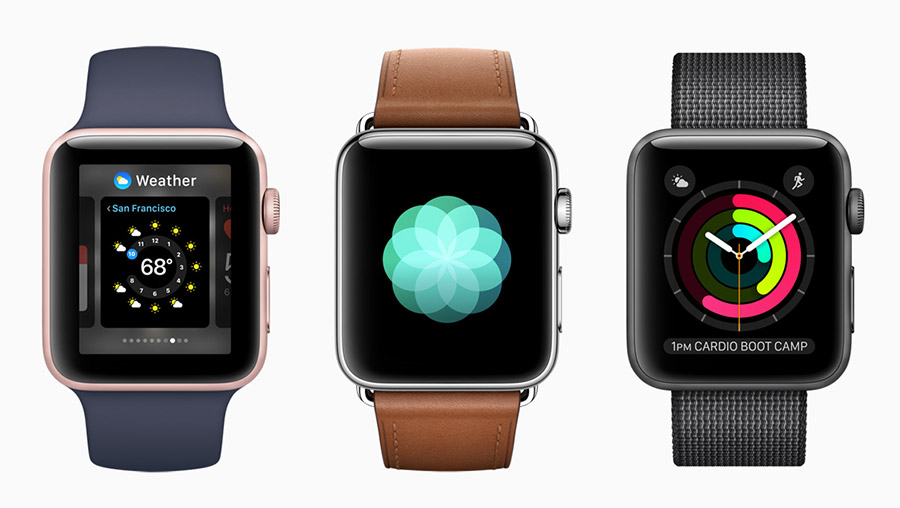
We like upgrades from the Series 6 that came before, including a full-size keyboard with support for swipe typing, a bigger screen, improved water resistance, and faster charging. Apple has long been the frontrunner when it comes to smartwatches, and the Series 7 continues to showcase its dominance. It has great workout tracking capabilities, with features like SpO2—an important metric for endurance athletes—and an FDA-cleared electrocardiogram. That's what helps make it one of the best fitness trackers too. Additional features include a new S6 processor that is up to 20% faster than the S4 and S5, a 2.5× brighter always-on display, and an always-on altimeter. The Series 6 watch was updated with faster charging hardware such that it completes charging in ~1.5 hours.

Force Touch hardware was removed, consistent with the removal of all Force Touch functionality from watchOS 7. The Series 7 is also equipped with new hardware that enables ultra-rapid, short-range wireless data transfer at 60.5 GHz, though Apple has not fully explained this new functionality. The major differences between the new Apple Watch Series 7 and the Series 6 it replaces are relatively small. The Series 7 has a slightly larger, stronger, and brighter display, faster charging via USB-C, and a series of new colors for the aluminum model. It's also rated for IPX dust resistance for the first time.

Apple hasn't listed the complete technical specifications of the Series 7 as of this writing, but from what Apple has described, it has the same health features, sensors, processor, and battery as the Series 6. The Apple Watch Series 7 offers the same health monitoring features available with the Series 6. A built-in accelerometer and gyroscope enable other important health-related features such as fall detection. Apple's latest smartwatch is mostly an incremental upgrade from the Apple Watch 6, maintaining an 18-hour battery life, the same CPU and adding no new health features.

But the enlarged display is game-changer, and makes it difficult to return to previous-generation models. The Series 7's big screen adapts wearable computing for more everyday applications, making it practical to be productive from your wrist. The Apple Watch Series 7 builds upon its class-leading predecessor with a larger screen, faster charging, and improved durability.
Between the hardware updates, ample health and safety features, and unrivaled third-party app selection, it offers the best smartwatch experience you can get today, earning it our Editors' Choice award. Apple hasn't explicitly mentioned the battery capacity of the Watch Series 7, but it should last an entire day on a single charge. However, compared the previous generation smartwatch model, the Watch Series 7 charges 33% faster. Apple has updated the charging architecture and used a Magnetic Fast Charger with a USB-C cable for the Watch Series 7. The watch's battery level can go from 0-80% in around 45 minutes.
If you charge the Watch Series 7 for up to 8 minutes, you can easily get 8 hours of sleep tracking. Initial reviews for the device have been generally positive with some caveats. Reviewers praised the watch's potential ability to integrate into everyday life and the overall design of the product, but noted issues of speed and price. Many reviewers described the watch as functional and convenient, while also noting failure to offer as much potential functionality as preceding smartphones. Farhad Manjoo of The New York Times mentioned the device's steep learning curve, stating it took him "three long, often confusing and frustrating days" to become accustomed to watchOS 1, but loved it thereafter.
Some reviewers also compared it to competing products, such as Android Wear devices, and claimed "The Smartwatch Finally Makes Sense". He concluded that there is no "killer application" so far besides telling the time, which is the basic function of a wristwatch anyhow. As for the sensors, the Watch Series 7 has the same sensor as that of the Apple Watch Series 6.
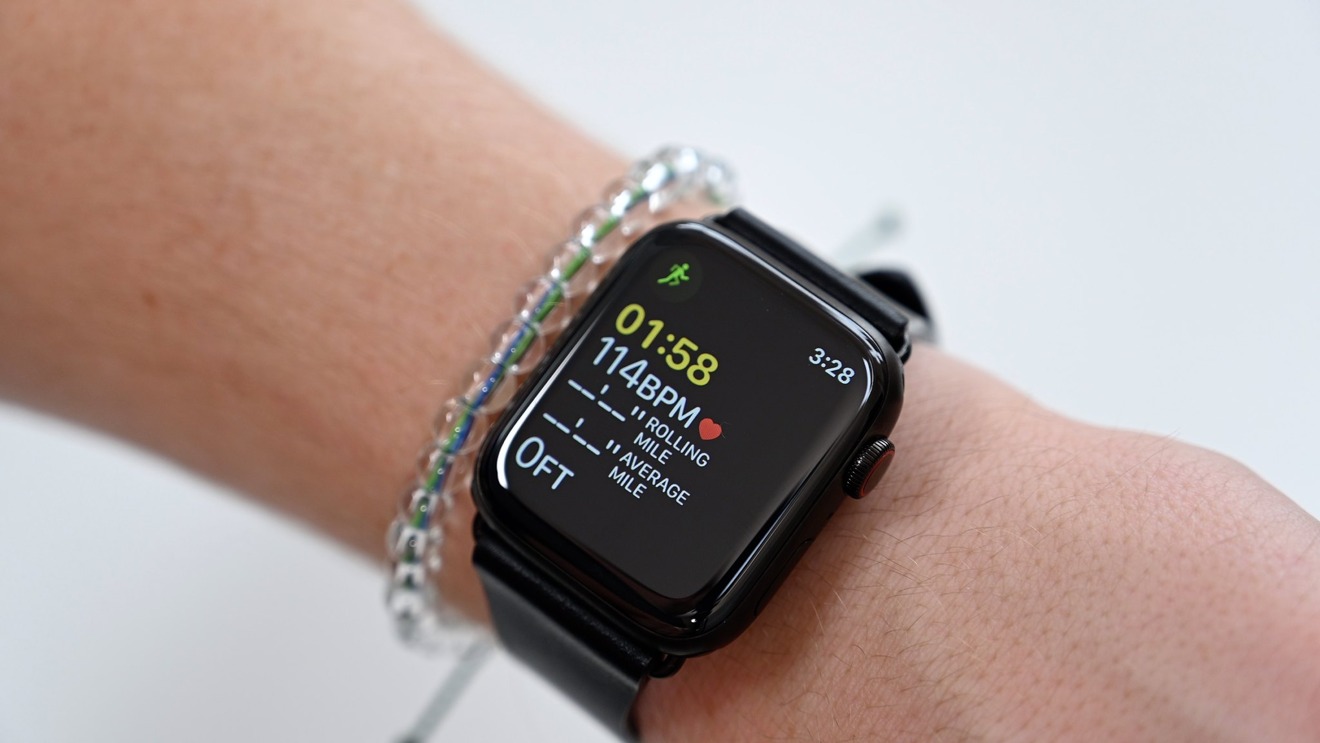
It includes an accelerometer, barometer, ECG , gyroscope, heart rate sensor, SpO2 sensor, and a VO2 Max sensor. Equipped with all these sensors, the Watch Series 7 offers blood oxygen monitoring, fall detection, heart rate monitoring, sleep tracking, and much more. Apple has also made some significant improvements to battery life and charging on the Apple Watch Series 7. The company claims that the new smartwatches offer 18-hour all-day battery life, along with 33% faster charging than the previous model.
Note that the altimeter can be inaccurate in some weather conditions. The Apple Watch can now charge 33 percent faster charging compared with Apple Watch Series 6 thanks to a new charging architecture and Apple's Magnetic Fast Charger USB-C Cable and an 18W or higher power adapter. This means that just eight minutes of charging time can provide up to eight hours of sleep tracking.
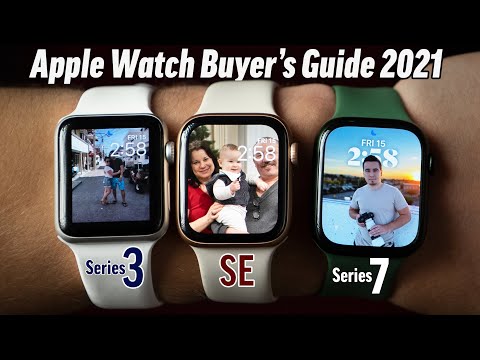
The Magnetic Fast Charger USB-C Cable ships with the Apple Watch Series 7, but users will need to supply a 20W or higher power adapter to get fast charging. The Apple Watch Series 7, announced in September 2021, is the current iteration of the Apple Watch that originally launched in 2015 and replaced the Series 6. The Apple Watch Series 7 builds on the design of previous Apple Watch models with a more rounded design and offers some notable new features including larger displays, improved durability, and faster charging. There are some tradeoffs with the Apple Watch Series 3 because it is a much older model, such as a smaller display, an older chipset, and the lack of a compass, fall detection, ECG, and blood oxygen monitoring.

The most notable addition here is a display that's 20% larger than its predecessor, capable of fitting 50% more text. The screen is brighter as well, and fortified by stronger crystal, with the watch now sporting an IP6X rating for dust, coupled with the existing WR50 water rating for swimming. Contrary to rumors, the overall battery life hasn't improved , but charging is now 33% faster. The Apple Watch Series 7 is among the best in its segment when it comes to health and activity monitoring, delivering useful insights, challenges that you can undertake with your friends, and a lot more. For blood oxygen and heart rate monitoring, the smartwatch takes readings throughout the day, and you can view the data from the Health app on your iPhone. You can also manually measure your blood oxygen level and take an ECG by pressing your finger to the digital crown, with the readings stored on your phone.

TechRadar gave it a score of 4.5/5, calling it one of the top smartwatches, while criticizing the short battery life. Digital Trends gave it a score of 5/5, calling it Apple's best product and praising the design, build quality, and software, among others, while criticizing the battery life. CNET gave it a score of 8.2/10, calling it the "best overall smartwatch around", while criticizing the battery life and lack of watch face options. T3 gave it a score of 5/5, calling it a "truly next-gen smartwatch" due to its thinner body and bigger screen compared to the Series 3, and health features.

In comparison to other Apple products and competing smartwatches, marketing of the Apple Watch promoted the device as a fashion accessory. Apple later focused on its health and fitness-oriented features, in an effort to compete with dedicated activity trackers. The watchOS 3 added fitness tracking for wheelchair users, social sharing in the Activity app, and a Breathe app to facilitate mindfulness.

Apple says that with the introduction of sleep tracking on Apple Watch, it has noticed a shift in the way users use, and charge, their devices. To this end, you can charge your Series 7 for just eight minutes to enable a full 8-hours of sleep tracking, and zero to 80% takes just 45 minutes. The key to this is the improved battery connector on the back of the watch and corresponding changes in the new charge cable's puck. This means that you'll only get the full fast-charging experience if you use the charger that came in the box with your new Watch.

If you use a third-party stand or any other charger from Apple, you'll get the regular charging speed from last year. This might sound negligible over previous years, but again, switching from the Series 3, there is definitely a noticeable weight difference to the new watch. Couple that with the larger size means the new form factor has taken a little bit of adjustment, and if a lightweight, low-profile watch is important to you for exercising, this is just something to bear in mind. On the whole, however, what Apple has done in packing this larger, more vibrant display, better battery life, and SiP improvements into a Watch that barely any bigger than the previous model is definitely to be lauded.
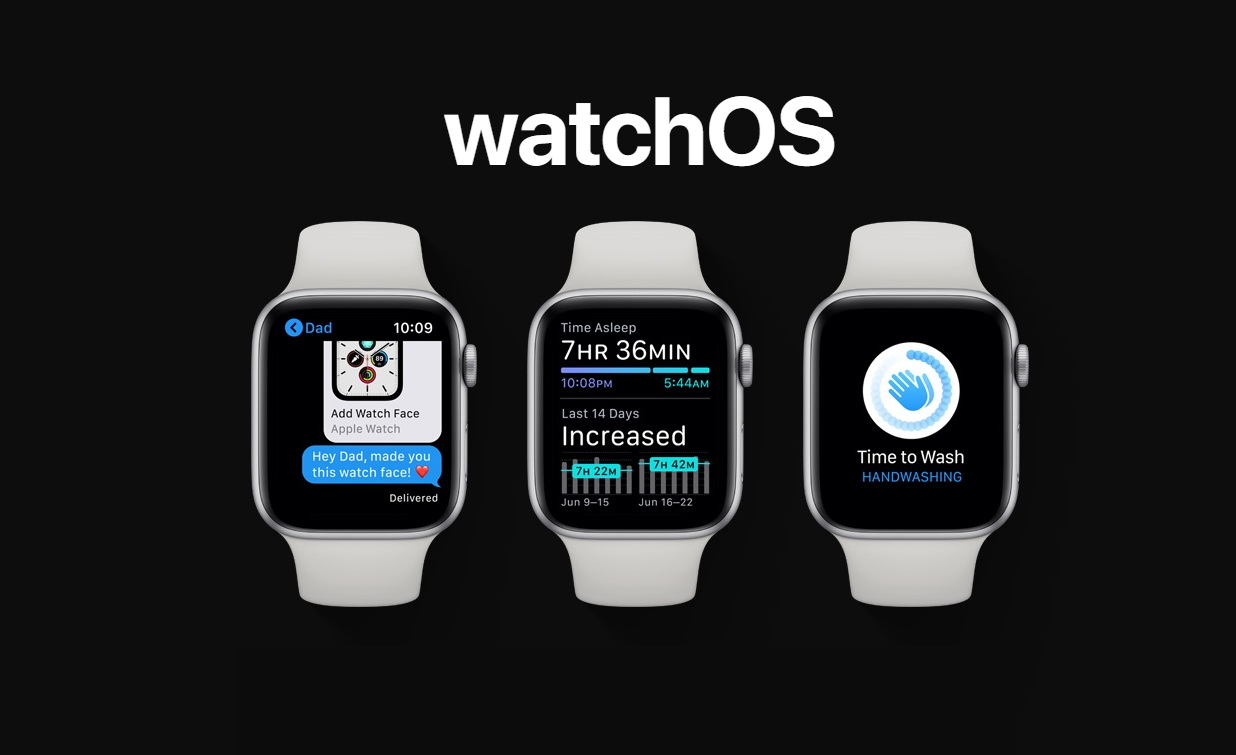
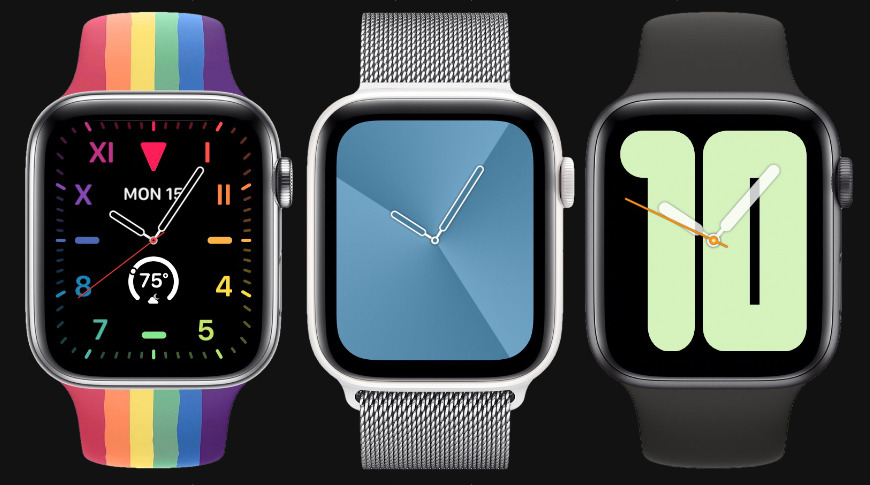
A series of seemingly negligible design changes actually add up to make a big difference, and whilst at first glance the Series 7 doesn't look much different, it feels almost like a whole new product. Paradoxically, one of the best things about the Series 7 is that despite all the new screen real estate, it feels like the design, relatively speaking, has barely changed at all. The largest, most advanced Always-on Retina display yet makes everything you do with your Apple Watch Series 7 bigger and better. Series 7 is the most durable Apple Watch ever built, with an even more crack-resistant front crystal.

Advanced features let you measure your blood oxygen level,¹ take an ECG anytime,2²and access mindfulness and sleep tracking apps. You can also track dozens of workouts, including new tai chi and pilates. The new Apple Watch Series 7 was announced alongside the iPhone 13, iPad, and iPad Mini, but it's the final device of Apple's new fall products to launch. This newer model sits atop Apple's current lineup of smartwatches, which still includes the SE and Series 3 rounding out the line. The Series 7 has an 18-hour battery life, the same as the Series 6.
Apple says that the Apple Watch Series 7 offers improved charging speeds through its magnetic charger thanks to the inclusion of USB-C rather than USB-A. According to Apple, the new charger fills up the Apple Watch 33 percent faster and only needs eight minutes of charging to make it through a full eight hours of sleep tracking, according to Apple. Apple Watch Series 4, which launched a year later, featured a major redesign with a screen that was 30% bigger in both models and a 50% improvement on its processor over the Series 3 version. Speakers and microphones were rearranged so they were louder and more useful, and Series 4 introduced the fall detection feature, ECG capabilities, and the second-generation heart rate monitor.
This new Apple Watch also shares the same sensor as last year's, so you'll have to wait for the hotly anticipated blood pressure and glucometers features in Apple Watch Series 8 . However, you can still track your blood oxygen levels, ECG and heart rate, so it's still a solid smartwatch for fitness buffs. There's also a new mindfulness app, cycling fall detection and calorie burning calculator, which overall makes this the best Apple Watch to date.

Finally, keep in mind that for all their impressive features, Apple's and Samsung's smartwatches offer only one-day battery life. If that's one of your main concerns, we suggest the Editors' Choice-winning $229.95 Fitbit Versa 3, which offers less in the way of third-party apps and feels a bit less refined, but lasts for days on a charge. On a more positive note, thanks to its new charging architecture, the Series 7 juices up quickly. With its new USB-C compatibility, the watch charges 33% faster than the Series 6.

Just 45 minutes on its fast-charging puck takes it from dead to 80% battery life. If you're running low on battery life at the end of the day, popping it on the charger for just eight minutes gives you enough juice for eight hours of sleep tracking. Each model through Series 3 comes in a 38- or 42-millimeter body, with the larger size having a slightly larger screen and battery.

The Series 4 was updated to 40- and 44-millimeter models, respectively. The Series 7 has been updated to 41- and 45-millimeter models. Featured Apple-made bands include colored sport bands, sport loop, woven nylon band, classic buckle, modern buckle, leather loop, Milanese loop, and a link bracelet. If like me you don't wear your Watch whilst sleeping, you should find yourself charging your Watch every 1.5 days, as opposed to every day on older models. If you're a Series 6 owner, you'll be upgrading for faster charging, but not longer life. Make no mistake though, the upgrade to charging is a big one and makes the Apple Watch a much more reliable companion if sleep tracking is important to you.
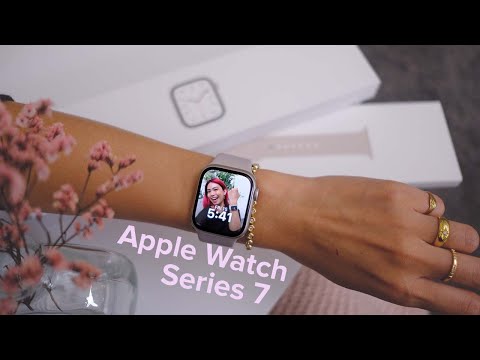
And like I said, given the improvements to the Watch's display, the fact the battery life hasn't diminished I think is an accomplishment in and of itself. The aluminum Apple Watch models feature Ion-X glass to protect the display, while the stainless steel and titanium models use sapphire crystal glass. Sapphire crystal glass offers better scratch resistance than Ion-X glass because it is a harder material, which means the models with sapphire crystal models are more resistant to scratching and everyday wear.
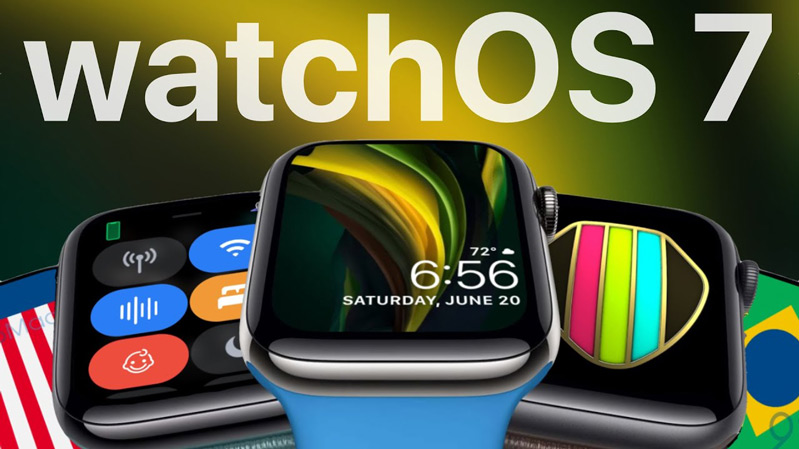
Apple Watch 7 Expected Price In India In the past, Apple's watchOS looked similar across all its smartwatches, minus select apps exclusive to the new hardware inside a given model. Apple Watch 7 doesn't have new sensors, though, so instead the company altered watchOS 8 for a bigger screen. This leaves, as per the document, only a handful of upgrades between the two generations of smartwatches that display noticeable improvements – the bigger display, slightly faster charging, USB-C, and IP6X dust resistance.
The 1st generation Apple Watch uses the single-core S1 system-on-chip. It does not have a built-in GPS chip, instead relying on a paired iPhone for location services. It features a new linear actuator hardware from Apple called the "Taptic Engine", providing realistic haptic feedback when an alert or a notification is received, and is used for other purposes by certain apps. The watch is equipped with a built-in heart rate sensor, which uses both infrared and visible-light LEDs and photodiodes. The new generation Apple Watch brings minor changes compared to Watch Series 6 in terms of features and specifications.
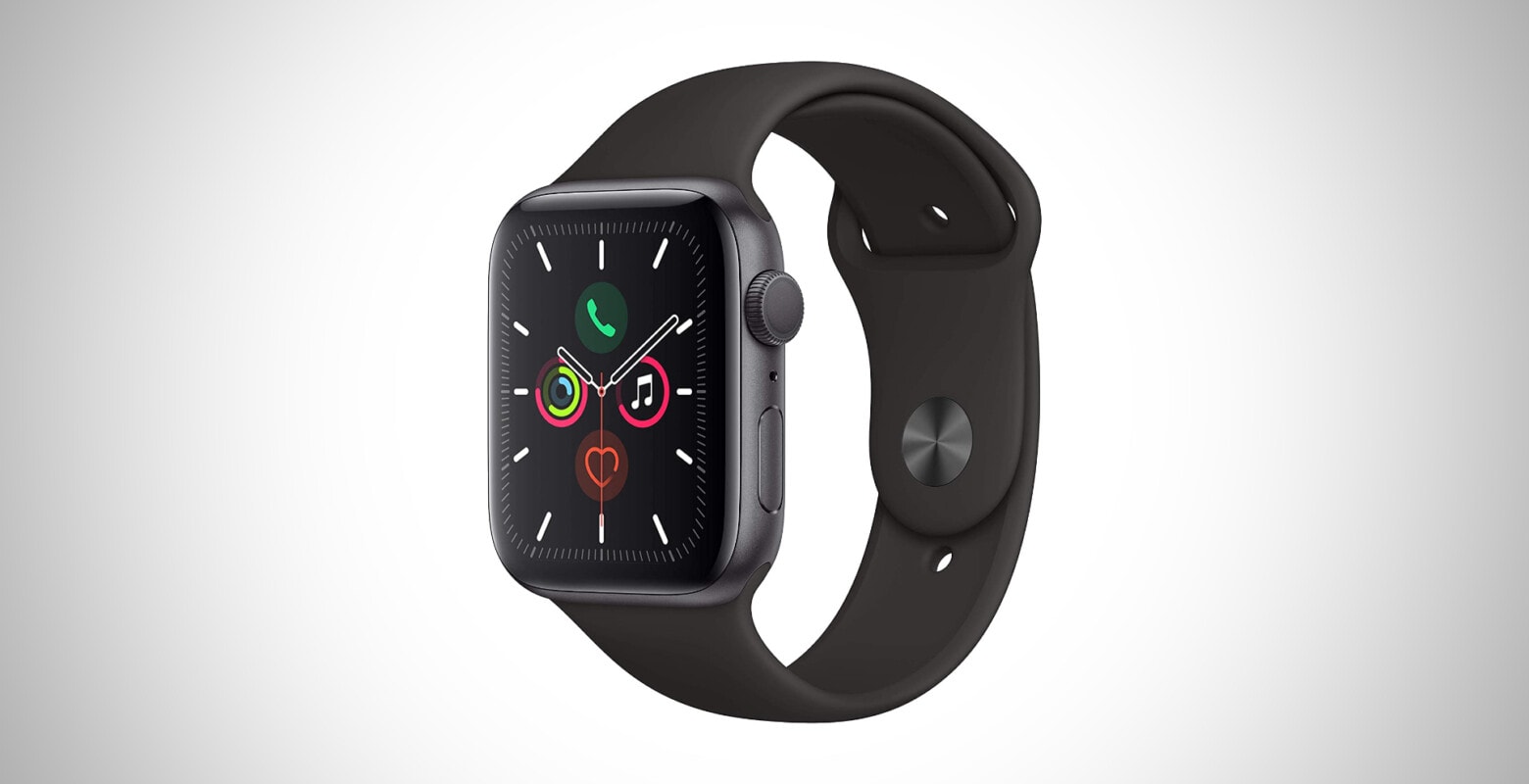
However, it has a new design that includes even thinner bezels and a bigger screen with curved edges on all sides. Apple has also offered the latest top-end watch in additional case materials for years. This generation is no different, with the Series 7 available in stainless steel starting at $699 and titanium starting at $799, as well as band options from luxury fashion boutique Hermès. Most people opt for aluminum, which offers the same functionality at a lower price, but the premium models have a unique fit and finish.

Apple Watch Series 7 models are also able to charge 33 percent faster, with just eight minutes of charging providing up to eight hours of sleep tracking time. The obvious challenger to the Apple Watch Series 7 is Samsung's Galaxy Watch 4. Samsung's exclusivity with Wear OS 3 means this is the only smartwatch series to run Google's latest wearable OS at the moment, and that attracts a premium. The hardware itself is fantastic, you get ECG as well as blood pressure and blood oxygen monitoring, and you get tight integration with Samsung phones. The downside is that most of the health-tracking features are limited to Samsung phones, so if you're using a phone from a different manufacturer, you miss out. As for monitoring, the Series 7 has a lot to offer; there's ECG and blood oxygen monitoring, and it has a third-generation optical heart sensor with 24/7 heart rate monitoring.


No comments:
Post a Comment
Note: Only a member of this blog may post a comment.